Saturday, 11 February 2017

Qaysari Bazaar


We don’t often visit the big bazar but when we do I’m always amazed by all the beauty of it.

 The Qaysari Bazaar is the oldest bazaar of Erbil. It’s located in the center of Erbil and the city is built around it. The bazaar lies next to the citadel, which can be dated back to 5th millennium BC but it’s probably even older than that. The walls of the big bazaar are the original walls dating back from the 13th century. It must be said that the walls have recently been renovated and that has brought the old features and patterns back, which are beautiful.

The name Qaysari comes from the word ‘Saray’, which is an Ottoman term for castle, palace or government building. This word did not only refer to the citadel but also to the government building located next to the bazar.


Last Saturday I took a walk through the bazaar with my mother. My mother was born in the Teyrawa district of Erbil, which is very close to the Bazaar. On our walk, she showed me the way to the Hamam where she used to go. There a lady would wash her hair. She also shares her memories of her father’s printing shop in the bazaar. “When I was young, the city only consisted of the citadel and the bazaar.” She said. “Due to its location, business men from Iraq or Turkey would stop by our shop or the bazaar.”  


 The bazar used to have different parts. Each part would sell different items. One only fruits, others only clothes. This is a bit changed during time but most goldsmiths are still located in one area. The bazar is so big that you can get lost in it for hours. The bazar is mostly indoors and it’s therefore cool in the summer.


Almost everything can be found in the bazaar. From fresh Kurdish yoghurt and local produced walnuts to shoes, clothes and gold. The reason I went to the bazaar last Saturday was because I wanted to repair my bag. I asked around and only a few minutes later I found an old man, fixing shoes, sitting in front of a mosque. He had fled Mosul last year, hadn’t seen his family since. Erbil and its bazaar have taken him in and he’s happy making his money here.


                To me that’s the beauty of the bazaar. When you walk through it, you can still feel and see all the authentic cultural beauties from all these different cultures. Erbil has been a safe-haven to so many different ethnicities and that for centuries long.

Tuesday, 2 February 2016

Cultuurverschillen


Vergeleken met mijn oudere broer was ik vroeger een dwaas. Toen hij de Koerdische taal al onder de knie had, maakte ik nog gebaren met m’n handen omdat ik de woorden niet kon vinden en werd ik uitgelachen omdat ik een raar accent had. Terwijl hij al vrienden maakte op de universiteit, werd ik op school bekeken alsof ik twee verschillende schoenen aanhad.

Ik had geen idee dat ik in een cultuurshock terecht zou komen want ik was immers Koerdisch opgevoed in Nederland. Het was voor mij dan ook een excentrieke ontdekkingsreis. Ik ontdekte dat je niet te direct moet zijn en dus uitnodigingen niet meteen moet afslaan. Maar ‘Inshallah’ kwam er bij mij het eerste paar jaar niet eenvoudig uit. Ik ontdekte dat het ongewoon is om een hond als huisdier te hebben en dat honden veelal als vies worden beschouwd in deze samenleving. Vol overgave vertelde ik mijn schoolgenoten over onze hond die het liefst voor het kacheltje in de woonkamer sliep.

Ik weet niet of ik na 11 jaar echt geïntegreerd ben, ik denk dat ik nogal wat streken laat vallen. Gister nog stond mijn broer me uit te lachen toen ik hem vertelde over een bijna aanrijding. “Dat je je daar nog druk om maakt,” riep hij uit. “Je moet gewoon zelf wat beter opletten.”

Laatst stond ik bij een tankstation en de drang kwam om uit te stappen. Toen ik eenmaal de slang in m’n hand had om te tanken wist ik me geen houding meer te geven, dit omdat ik zelf nog nooit een liter heb getankt, het wordt altijd voor me gedaan. Ik moet erbij vertellen dat ik al 8 jaar een auto bezit. Toen ik dat bewuste moment om mee heen keek werd ik niet alleen door andere bestuurders bij het tankstation aangestaard maar zelfs mensen die langsreden minderden vaart. Ik ben weer snel mijn auto ingestapt.

‘Heb je nou al Koerdisch geleerd?’ vroeg een oud klasgenoot, waar ik al 3 jaar geen contact mee had, mij op Facebook laatst. ‘Wat is er mis met mijn Koerdisch?’ vroeg ik haar in het Koerdisch. ‘Niks hoor, ’ antwoordde ze. ‘Je bent toch niet boos?’ vroeg ze nadat ik niet meer reageerde op haar andere vragen. Ja, natuurlijk was ik boos. Je bent toch niet meer Koerd als je een klein accentje hebt en geen Arabische woorden in elke zin plaatst?

De straathond bij ons in de buurt krijgt af en toe een lekker knakworstje van me, de blik van de buurvrouw neem ik dan maar voor lief. De Koerdische taal gaat gemengd met de Nederlandse en de Engelse. De veelal Arabische woorden die er hier ingegooid worden beheers ik ook al redelijk maar ach, met gebaren kom je toch ook heel ver?

Saturday, 10 May 2014

Your name is your identity


Dear followers,

            Firstly, I would like to apologize for my absence to all my regular readers and followers, I have been incredibly inactive. Our son was born on March 11 and I needed some time to find a good routine that would work for myself and my family. But our son is doing so well. We truly have been blessed with a healthy, strong and loveable son.

            About 9 months ago, we were told that we were going to have a son, I had not looked into boys names. The only thing I was sure about was that it had to be a Kurdish name.

            I’m a firm believer in the phrase ‘your name is your identity’. As a parent you are given the right to name your child and in some cases this child will face many difficulties when growing up. Your child can be discriminated or refused because of his or her name. My grandfather was such a patriotic man that he named my mother Kurdistan. Not knowing, back then, how many challenging she would face because of her name.

She always loved to study mathematics but because of her name she didn’t get accepted. She either had to walk away or change her name. Now, I remember, back when I was at university, I met a girl who had a very funny Kurdish name. Translated to English it means ‘don’t cry my love’. Maybe she cried a lot when she was born? But would you, as a parent, like to burden a child with a name like that for the rest of her life? I do have to say that my son will find some difficulties in the name we have given him. Maybe I have a bit of my grandfather in me when it comes to patriotism.

            I know that my son will be going back and forth between Kurdistan and Europe and therefore I didn’t want a name that would be difficult to pronounce. We named our child Aryan and I know that some people will relate that name to the concept in the Nazi ideology of the Nordic race – According to them; the Aryan race was a master race. But it just happens to be our race as well. His name originates from the Sanskrit word Arya which means Noble. And looking further into history of the Kurdish language, Aryan truly identifies his identity.
I found his name when I was going through my grandfather’s/mother’s book. My grandfather started to collect and write down all the Kurdish names he had heard of and published that book in the 50’s. This book has been republished a couple of times by my mother and now I wanted to add the names that were still missing. I have been writing down all the names and the new names I knew of during my pregnancy.
I also wanted to know how many people here in Kurdistan give their child a Kurdish name and so I spent my morning counting all the Kurdish names that were given to children registered in Hawler in January 2014. If you’re curious about the number or if you’re curious to know if there is an increase or not, you’ll have to keep an eye on my blogs. It will come up soon.
           About two months ago I was walking around in Europe and I met Dilxwaz, I didn’t know she was Kurdish until she introduced herself; a very pleasant surprise. Identity groups, belonging, language and names; without them, Kurds would have ‘disappeared’ already.


Tuesday, 21 January 2014

Kurds and their future..


So many changes when it comes to construction and everybody seems to love it; Park View Apartments for example, is according to their website ‘the most prestigious project in Erbil’. I do not agree with their slogan owing to the fact that none of these Park View Apartments have a view or a park. This fact appears to be a minor issue since no one really seems to care about that part. ‘You can build a park on your balcony if you really want a park’ the salesperson answered when a friend of mine asked for clarification. The irony in this all is that we Kurds don’t mind paying an absurd amount of money for a project like Park View.

The builders, the engineers and the investors from Turkey and Lebanon don’t care about a Park. They do not care about our health and why should they? They are not here to invest in plants, parks or our health. What drives me mad is that we seem to think exactly the same. We love to invest in these ridiculously expensive projects, without really thinking ahead. We haven’t made plans for the future; our health, our safety or even our economy.

We all know the exact prices, square meters and location of these new projects but why are we so indifferent when it comes to our safety? Can we blame it on all the wars we’ve been through? That maybe because of all these wars we never really could look ahead?
Now let’s discuss our future here.

Let’s say we want to buy a villa in one of these projects, do we know if an invalid person can even enter the villa? What if your family member, who could walk yesterday but can’t walk today, wants to go in and out of your house? Can you rebuild your house? We have so many staircases in our houses; it really is as if no one has thought about an invalid person, at all. And when you want to get a stair lift, you can get a second handed one from Europe that will work for a couple of weeks but you won’t be able to find a new one even if you’re willing to pay a little more. We do not invest in good home medical supplies like electric wheelchairs. When is this going to change?

Let’s say we want to buy an apartment on the twentieth floor in Gulan Park. Is it earthquake resistant? Have we even thought about earthquake building codes now that more earthquakes occur due to the oil extraction? Have we thought about the social and economic difficulties we will face when a heavy earthquake strikes Kurdistan? What if, something like this happens do we even know what to do in situations like that?

We all know the telephone emergency number is 911 in the United States of America. All Dutch people know this number is 112 in the Netherlands but do we, Kurds, know which number to dial, here in Kurdistan, when in an emergency situation? Let’s, for argument’s sake, say that we all know the number here in Kurdistan; would you even want to give it a try when you need an ambulance or fire truck?

About a year ago, the maid from next door ran out of their house into ours screaming ‘fire, help, fire’ and I was as panicked as she was because I had no idea what number to dial. After a few phone calls I finally got the number of the “Erbil Civil Defense Directorate”. I explained where we lived and thought that it wouldn’t be very difficult as we live in a well-known compound.

I was thankful when I heard the siren only a few minutes later but lost hope when I saw the truck taking a left where he should’ve taken a right. I got so desperate that I almost ran into the house next door with our own water hose. By the time the truck arrived, neighbors had already taken care of the fire.

It’s not very different when it comes to the ambulance service here in Erbil. Most cars don’t make way for an ambulance with lights or the siren on. Why? ‘He might be in a hurry to eat his lunch.’ My colleague answered. People do not take it serious anymore but what if it is serious? Are we even prepared for that? 

Monday, 30 December 2013

A good book


On a cold winter’s day
When you’re ready to slip away
From this ordinary place
Into imaginary space

Set your mind free
With a cup of tea
In your own cozy and warm bed
Ready to take the next step

Pick up a book and read the words
Let go of all your concerns
The story will take you there
And you’ll be walking on air

It’s the magic of a writer
Who can be an overnighter

But when you’re too tired to stay up
Close your eyes and walk through

A dream where only books can take you

Hawler

30/12/2013

Sunday, 13 October 2013

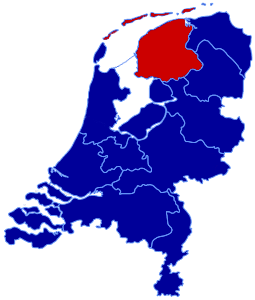
Friesland versus Kurdistan


On one sunny day I was enjoying my very Dutch croquette in the snack bar around the corner of our house when a tall man walked in and ordered something for himself and his family. The man looked old and tired. The young girl behind the bar listened to his order but I noticed that she hadn’t written down anything. After the old man mentioned everything he wanted to order, she smiled and asked the man, in Dutch, if he could repeat what he said but this time in Dutch. I left my croquette for what it was because I didn’t want to miss this. My eyes turned to these people, my ears only wanted to hear their conversation. I leaned forward because this was going to be interesting. I saw something in the eyes of that man, something I’ve seen before but somewhere far away. He was a fighter, this man was furious at the young lady. He answered loudly: “You are here in Friesland, you should learn Frisian. I am not going to change my language because you cannot understand me. Now go get someone who speaks Frisian.” And deep down I felt sympathy and love for this man. He was one of the few Frisians I had come across to in those 20 years who still fought for their independence or difference. He reminded me of us, of Kurds.

There are two languages in the Netherlands: Dutch and Frisian. The Frisian language is the only minority language that has been recognized under part III of the European Charter for Regional or Minority Languages. What this means is that the Netherlands is obliged to take certain actions in order to foster this minority language. There are different methods to promote the language; one of them is by means of education and since 1980 Frisian Language has been a compulsory subject for primary school pupils in the province of Friesland. Unfortunately, our language, Kurdish, is still not a compulsory subject in some parts of Kurdistan.

The history of the Frisians starts around the 6th century BC. It can be said that a justified termination of this history is in 1813 when Friesland like all other regions becomes a province of the newly formed Kingdom of the Netherlands. Until today Friesland tries to preserve and promote its language, culture and identity but Frisian developments can only take place within the framework of the Dutch state and are therefore limited. Big decisions are not made in the Capital of Friesland Leeuwarden but in The Hague. Big decisions are not made in the Capital of Southern Kurdistan Erbil but in Baghdad and only within the framework of.. Exactly.


The Frisians have their own flag and their own national anthem. They have their own bank, T.V and radio stations. Frisian horses and cows are very popular and even their sports are well known.


 The reason why Friesland isn’t a state? Well, there are some historians who believe that it’s the fault of many Frisians who weren’t patriotic enough in 1813. This reminds me of the Treaty of Sèvres where there was an initial agreement on the boundaries of a Kurdistan but which was rejected by Kurds.

There are so many similarities between Frisians and Kurds, Friesland and Kurdistan. I’m delighted that I had a chance to grow up among them. I learned so much from their rebellious way of thinking. I vote for an independent Friesland and an independent Kurdistan because in the end; Bûter, brea en griene tsiis, wa't dat net sizze kin, is gjin oprjochte Fries.
 

Saturday, 14 September 2013

The angel looking face elections


On almost every street corner in the city you will come across a smiling face. Eyes staring at you, some with a unibrow and some with too much make up on. One wears traditional Kurdish clothes; others wear suits and a few try to do it very well; a poster in which they appear with a suit on and one with traditional Kurdish clothes. The streets have been decorated with flags in many different colors; each color representing a party. If I had not known better I would almost think that there is a party every night in this town.

The elections are coming up. The citizens may choose someone who will represent them in the Parliament. The only question is, how do you choose someone if the substantive issues they stand for are not clear? It seems as if the most important thing is ‘which face will lead me’ and not ‘what will happen to my country?’

But I was still curious to know how everyone would vote. I was wondering if they would merely rely on appearance or would they vote for someone they know. Maybe some have even looked into the substantive issues of all those faces. So, the last couple of days i got some hilarious and astonishing answers.

A family member told me that the whole city of Duhok was looking for that angel face. How come no one had noticed her before? They were speculating that she is an inhabitant of that city and he said; I think every man of that city will give his vote to her.

To be honest, I cannot remember who got my vote the previous elections. I think I gave my vote to someone who had a likeable face .I thought I had not engrossed myself in the whole decision-making process. But I know now that it’s very difficult to know what or where representatives of a political party stand for. Thus, electors vote for a random candidate of a political party rather for an individual candidate.

Now that I know that most people do what I’ve done the previous elections, I’m not sure whether I should repeat my actions or not. I would like to give my vote to someone who wants to plant more trees and reduce the number of cars. I like to give my vote to someone that wants to work on improving public transportation; a subway, trams, trains etc. Someone who has thought about a central connection of gas that reaches every home. That person must also stand for an independent Kurdistan of course. Though I have many more points to add but I’m not sure if I will ever find that candidate before the end of the elections.

I’m quite sure that I will choose a good looking face again. The only thing I hope is that this year’s elections will be calm and that it will be as democratic as possible. I hope that if I somehow didn’t manage to go vote they won’t send someone else vote instead of me and I wish every candidate will clean up their faces once the elections are over.

May the ‘best party’ win even though the real winners are flag and poster makers.

Thursday, 18 July 2013

Students in Southern Kurdistan


The students who walk into my office the first time are optimistic and full of expectations. They’re hopeful and believe that they will be fluent in English by the end of this course. “Will I be able to speak fluently to foreigners after this course?” is the most common question asked at the first session. Obviously, I wouldn’t teach if I hadn’t thought that others would benefit from the lessons I give. But it’s really hard for me to give a good answer to that question. I honestly don’t believe they will be fluent in English after only four months unless they move to a place like Great Britain or the United States of America of course.

Most of us can speak our native language without any trouble. If the language people use on street, work or anywhere else is not the same as our native language we can, most of the time, easily adopt it. But what happens if you’re not certain which language is your native language? Some linguists argue that someone without a native language will not be able to learn another language properly and will even face difficulties in his or her native language too. This is because they don’t have a language to fall back on. It somehow makes some sense to me.

Southern Kurdistan has tried so hard to abandon the Arabic language as its native language which has caused enormous trouble for Kurdish adults and adolescents. Most of them were in the stage where when they were starting school the lessons were taught in Arabic but then it changed to Kurdish suddenly. They were confused and sometimes still are. Wars and oppression have made it hard for them to learn in a safe environment and some are still paying for it.  Does this mean that they fall under the category of “No language to fall back on?” I think it's better if we say that they haven't had the chance to learn their native language properly and that's why most of them still use Arabic words in Kurdish sentences.

When I explain my grammar lessons to my students they can give me the answers before I have even asked them. Yesterday I had a student who said she wanted the structure otherwise she wouldn’t understand. “SOV (Subject + Object + Verb) please, I don’t follow what you’re saying. I have to memorize the structure before I utter a word.” I was shocked. This is going to be a harder task than I had imagined. I tried to let her know that knowledge of a language is not the same as proficiency in a language.

Will the students who didn't have a chance to learn their native language be able to learn a foreign language? Will they learn a foreign language using a different technique than what they’re used to? Will I be able to help them along the way? Another challenge and I love it.

Wednesday, 19 June 2013

Shawushka

 
One of Shawushka’s employees knocks on the window of our door. The smile that was on my face, the one from just a minute ago, seems long gone. I always like it when she comes to visit us but today it’s different. I’m nervous and I think we all are. The decision we will make tonight will be a hard one.

As we all gather around the table, she grabs a few papers out of her bag and asks if my mother is sure. I want to tell her that we’re not sure. I wish I could tell her that there is a solution, that there is money, power and dedication from me. I hold still because I know there isn’t and even before I can say something my mother picks up her pen and puts her signature on the papers. “Shawushka isn’t what it used to be.” She says. “We’ve helped female writers in Kurdistan, We had the first Kurdish magazine which was written by women and for women. We held seminars, helped women in need, gave computer and English courses. We were there when others weren’t but now it’s time to let another generation shine. I am sorry that I have to close the doors of Shawushka.”   

Unfortunately, one of my mother’s works, or children, as she likes to call them, will close its doors. To me, and many others, Shawushka wasn’t only a cultural center. Many of my first works were published in Shawushka’s magazine. Ramdom people would recognize me from my articles in Shawushka. Even men would admit that they bought Shawushka because the topics were so good. It was our little baby (which had grown big) NGO.

I’m sorry that it had to end like this. I’m sorry that the person, up there, decided to make it hard for us to keep you open. I’m sorry you had to be the victim of that. I wish all the employees the best. Thank you all for your hard work. I will remember you, Shawushka, with a smile, from ear to ear. You were great.


Thursday, 23 May 2013

A Kurdish revolutionary writer, Hussein Huzni Mukriyani.


“Shara speaks Shakespearean Kurdish. She doesn’t use any Arabic, Turkish or Farsi words when she speaks Kurdish. Her Kurdish is peti* and if she doesn’t know the word in Kurdish she thinks about it until she remembers.” I am a bit shocked but pleased when my Christian friend next to me explains to an American colleague why he sometimes laughs when I speak Kurdish. I never knew it was because of my Shakespearean Kurdish. I always thought it was my weird, Dutch accent people would laugh about.

I believe I have to thank my parents and grandparents for this. We have some revolutionary Kurdish writers in our family who all fought, with their pens, type machines, printing presses and computers, for the Kurdish cause. In 1915 Hussein Huzni Mukiryani, my grandfather’s brother, bought a new printing press from Germany and invented Kurdish linguistic characters in order to distinguish the Kurdish language from the Arabic one. He was one of the most leading Kurdish writers and journalists; famous for his works. Serving the Kurdish cause back then wasn’t easy. He was threatened with death and imprisoned for several years.

A. M. Hamilton, was a civil engineer from New Zealand, who traveled to this part of Kurdistan to build a road that would stretch from Northern Iraq on to the Iranian border, met Huzni Mukiryani and described him in his book. What he said was;

“Sayed Heusni is not merely an historian, he is also the local journalist and newspaper proprietor. There is a brass notice on his door which reads, Zari Kermanji (The Cry of the Kurdish) which is the name of his paper…
His type is set by hand. From the oak of the mountains – side the cuts small blocks of wood.
He planes them smooth and true and upon them he etches the illustrations for his paper. He inks his plates, turns the primitive printing press, then sets and binds his sheets together to from the monthly magazine. A copy goes to the high Commissioner and another to the league of Nations in Geneva. The Cry of Kurdish is called a “monthly” magazine but often enough the little paper is suppressed on account of its Kurdish sentiments which are not always approved of by the Governments at Baghdad.”


A. M. Hamilton, Road Through Kurdistan. 1937.


On May 25, 1926, the first issue of Zari Kirmanji appeared in Ruwandiz. This Saturday, May 25th, exactly 87 years later, Huzni’s house will be rebuild in Ruwandiz. His house will be a cultural center for youth.

I will certainly be there to support it and to see where my peti Kurdish comes from.


*Peti means perfect Kurdish


Wednesday, 22 May 2013

Erbilicious


Just try to imagine this; you and your dear friends are having a lovely dinner in a garden somewhere in Hawler.  It’s spring, Kurdistan is green and you’re not only taking in the scent of delicious food that comes from the table in front of you but you can also smell the beautiful flowers surrounding you. You try to forget about your diet because you cannot leave this food untouched. You try everything that’s in front of you and you think that your day is perfect.

Then the next day, reality hits you, you don’t feel well and you think you got food poisoned.

You forget about all the lovely scents, the view and even the lovely times you had with others because the only thing you can think about is how sick you feel. Could it have been the chicken or the salad, the pizza or the hamburger? You feel so angry and so you boycott that restaurant for the rest of your life, no, maybe for a couple of weeks but you want them to know what happened to you right?

Don’t worry, not all places here are like that. Some of the restaurants do think about hygiene and don’t you even try thinking that this only happens in Kurdistan because on this Dutch TV Program “De Smaak Politie”, I’ve seen some gross and awful kitchens that you don’t even want to know about.

What’s my whole point? Well, I started a restaurant review website. It’s actually the first one here in Hawler and I intend to go to these places to let them know about your experience. You can like the restaurants and rate them.


I started this because I want you to experience everything I mentioned in the first paragraph minus the food poisoning part.
Click here for the website

Tuesday, 9 April 2013

Freedom

It was somewhere in 90’s when we were staying at Taban hotel in Permam. It was summer and we had not been in Kurdistan for many years. I didn’t like the weather; it was too hot for me. I was bored and there weren’t any children at the hotel to play with.

 One day a man came to visit my father. I had no idea who he was but I still remember our conversation very clearly. He asked me if I would ever come back to Kurdistan. I answered that I wouldn’t. I believe my answer was negative because that summer had been a disappointment. He smiled and asked “What can I do to make you come back, tell me, what is it that you want?” What a funny guy, I thought. Why would he ask me what I wanted, as if he could ever give me that? Somehow I felt uncomfortable for having these thoughts so I answered his question and this is what I said:

“I want to feel free. To have the freedom to choose whatever I want. To be free from any superpower that wants to control me. I want to be one with nature, to have a mutual understanding, to be in harmony and the only time I feel free and in harmony is when I’m riding a horse. Thus I want a horse.”

I never understood why I said this until last week. It was the first time on the back of a horse in Kurdistan though it wasn’t the horse promised by this man.

I guess I’ve always been nationalistic when it comes to my roots. I always had to fight for my existence as a Kurd, even in the Netherlands. However, when I’m on the back of a horse it is as if the horse and I can conquer every obstacle in our way. We’ll jump, fall, raise and do it again until it’s perfect.

My path in Kurdistan has been the same I guess. I fell, hurt my back and tried again. I won’t give up on my dreams and I hope that this dear man, the current prime minister, won’t either. I have been in Kurdistan for a long time now but I guess he has forgotten that he promised me a horse. I just hope he hasn't forgotten the other part of our conversation.

I’m still waiting for a free Kurdistan, but for now the horse will do.

Monday, 1 April 2013

Import an Asian maid

 
                “A fat one is lazy and eats all the food you have in your refrigerator. Back in my time they didn’t even have pictures to show us, you’re privileged, so don’t pick a good looking one out of all these because she will seduce our men.” The woman smiles as she goes on. “I have mine for a year now but she is very annoying.” The woman is pointing her finger at an Asian looking girl in front of us. “She begs us every day for some credit to call home but she only has the right to call once every two weeks. She went too far yesterday when she asked the neighbor for credit. I am here at the company to discuss her punishment.”

                I am shocked as I look at the Asian girl in front of us. Her head is bend down and she doesn’t look older than 25. She is one of the many housemaids imported to Kurdistan from Asia. These young girls leave their families to come work here for months and some even for years. It is as if it’s the latest fashion to walk around the supermarket with an Asian housemaid following you.

                Nowadays there are several companies here in Kurdistan that imports maids from Nepal, Indonesia, Bangladesh, Malaysia and India. “They clean the house, watch your children and cook. The Indonesian one is cheaper so what else do you want?” says a busy looking man behind a desk as he gives us a couple of CV’s to look at. He talks as if he is selling food or something. I am really shocked but I read them one by one and come to the conclusion that almost all these girls are married and have children. Most of them are not older than 30 and already have work experience in Lebanon or Kuwait. So how long have they been with their children? How hard can life be I ask myself as I stare at the Asian woman still standing in front of us? Maybe she has children too? Maybe that’s why she wants to call home every day? Could you blame her? Should she really be punished? Wouldn’t you do the same if you were that desperate and alone?

                I almost want to walk out of the building as another Kurdish woman with a maid walks in. I’m curious about her story so I stop and turn around to eavesdrop. “My maid wants to speak to the owner of this company.” The Kurdish woman says with confidence. I look at the maid who looks very shy. I hold my breath because I can’t take more disappointments. But when she starts to talk in Kurdish I’m amazed. Her Kurdish is almost perfect when she asks the man behind the desk for extension of her contract. She likes the family she is placed in and does not want to leave Kurdistan.

                I feel a bit better when I leave the building though I’m not sure if I would really want to import a girl from Asia. We have never had an Asian maid but sometimes a Kurdish woman would stop by on a Friday afternoon to clean a few rooms only because she wanted to and because she likes the work. “Kurds don’t work.” Or “It’s better if the woman doesn’t know you and your family.” Is what I hear often when I ask why they have an Asian maid. One woman even said “They can’t steal from you because they can’t get out of the country without their papers therefore it’s better to import an Asian one than to get a Kurdish one.”

                The only thing I hope is that these Asian maids here in Kurdistan will not be abused like they are in other countries. I hope they’re not beaten, raped or threatened and I hope they will have gathered enough money when they go back so that they don’t have to be a maid in another country ever again. A child should grow up with the mother around and we should have more confidence in our own people.

Thursday, 28 March 2013

Welcome to Erbil


                Other travelers might think I am insane but I can’t help sing the national Kurdish anthem as I walk in the terminal of Erbil International Airport. After all the wars that we, Kurds, have seen, who could have thought, years ago, that we, Kurds, would have our own international airport? Who could have thought that Erbil, one of the oldest continuously inhabited cities in the world, would become such an attraction to tourists? And, who would have thought that so many Kurds from the other parts of Kurdistan would call Erbil their home?
 
When I exit the airport, I welcome the smell of dust and the warm breeze that ruffles through my hair. “I am home” is the only thought I have as I go look for a taxi to drive me home. Yes, I am also excited to see my friends and family again and I am excited to see the change of Erbil. I’m sure there has not been much change for I’ve only been gone for 8 months.

                “You can make a U-turn over there.” I say with confidence. Erbil has been my home for years now and I know this city like the back of my hand. The driver laughs and does not make a U-turn. My head is spinning as I look at the road; there are so many cars here. What if we get hit? My heart is pounding and I almost whisper “You can’t do this, it’s not allowed!” I’m panicking when he says with a grin on his face; “Girl, you have been abroad for too long; you should let me do my job.” After we crossed the road safely, the air fills my lungs again and I guess the driver is right. In 8 months tremendous change can occur in a city like Erbil. But does it happen so rapidly that I will get lost in my own city? This will be my little challenge for tomorrow.

                As we drive into our neighborhood I start to get nervous. I can’t see our house anymore. It is as if I’m in a whole different place. I am glad when I see the Kurdish flag on our balcony. At least that has not changed. Let’s hope it never will. Let’s hope every Kurd may get the right to let the Kurdish flag wave in the air in every part of Kurdistan.

               I grew up abroad and decided to come back to Erbil so that I can feel, see and touch the change of our nation and this beautiful, old city. I hope you will let me take you on a tour through Erbil.